
Wind and Storm Damage Roof Insurance Claims in Chattanooga, TN
Chattanooga sits in a valley boxed in by Signal Mountain, Lookout Mountain, and Missionary Ridge, and severe thunderstorm lines moving through that corridor can funnel straight-line wind and tornado-warned gusts hard enough to lift membrane and tear edge metal off a commercial roof.
Roof Work
Wind damage starts at the edges
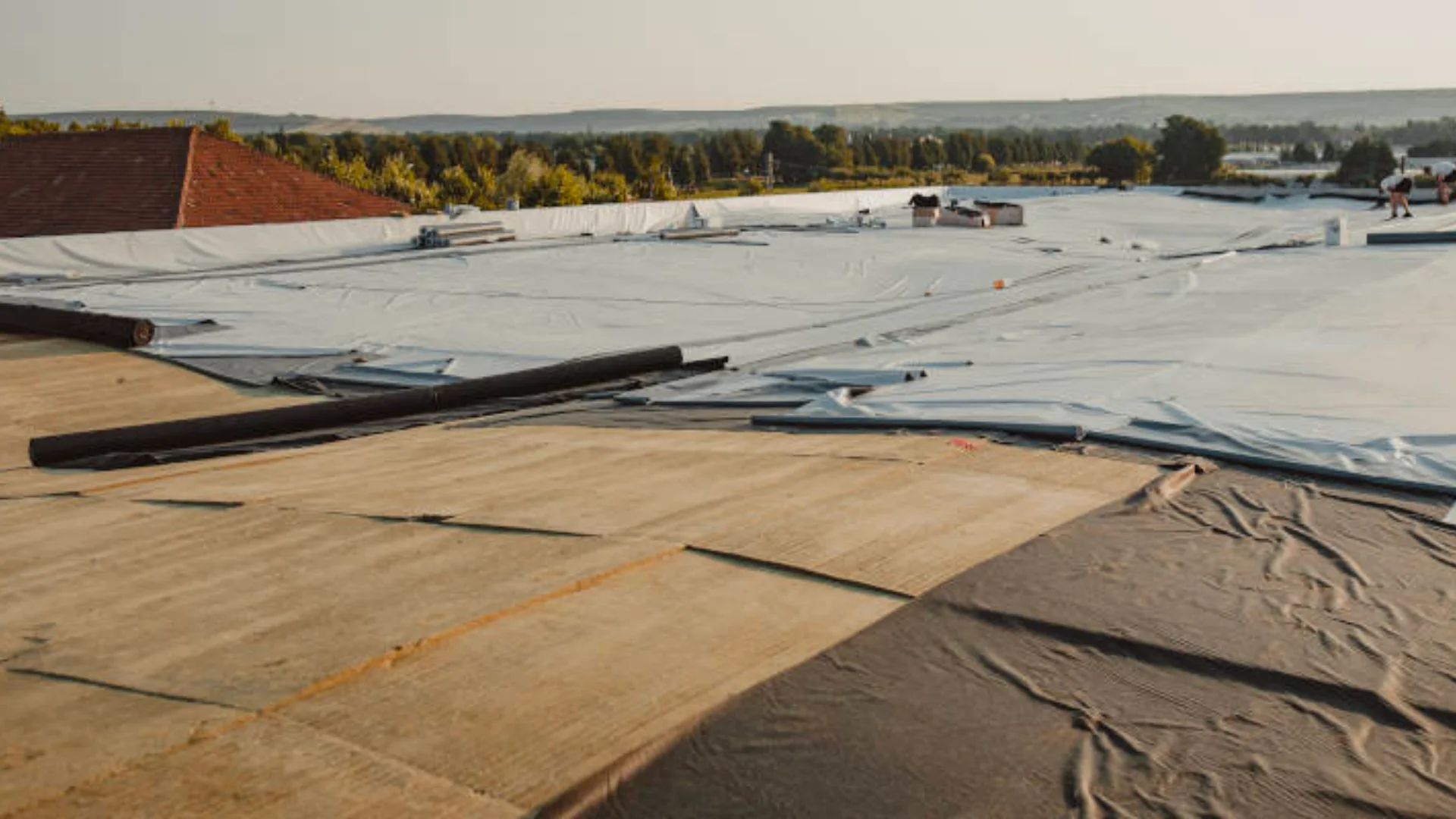
Wind uplift, torn membrane, and edge-metal damage documented for Chattanooga commercial storm claims.
The Tennessee Valley sees its share of severe thunderstorm outbreaks, and the same ridgelines that give Chattanooga its skyline can channel and accelerate wind as a storm cell moves through the valley floor. A gust that would pass over open country can hit a low-slope commercial roof here with more force at the parapet and rooftop-unit level than the general forecast wind speed would suggest. That's where most wind claims start: not with a roof blown off wholesale, but with edge metal peeled back, a membrane seam opened at the perimeter, or a rooftop unit shifted on its curb.
Where wind damage shows up first
Wind uplift on a mechanically attached or ballasted membrane roof concentrates at the edges and corners, where suction is strongest. Coping caps pull loose, edge metal fasteners back out, and membrane laps open along the perimeter before the field of the roof shows any sign of trouble. On buildings with parapet walls, common on the older converted warehouse stock along the Southside and riverfront, wind can also drive rain sideways under coping and through wall-to-roof transitions, which shows up as interior water damage that has nothing to do with a membrane puncture.
Straight-line wind versus tornado-warned events
Not every damaging wind event in Chattanooga is tied to a tornado warning, and a claim shouldn't hinge on whether one was issued. Straight-line wind from a squall line moving through the valley can do the same uplift and edge-metal damage as a more isolated rotating cell. What matters for the claim is documenting the wind direction, the pattern of damage relative to that direction, and the roof's exposure, corner units, windward parapets, and any rooftop equipment that shifted or tipped.
Documenting the full extent of wind damage
A wind claim file has to cover more than the section that's actively leaking. We check every parapet run, every rooftop-unit curb, and every drain and scupper for debris that blew in during the event. We photograph fastener backout, torn or billowed membrane, displaced ballast, and any structural movement at curbs or equipment supports. Buildings near Enterprise South and the Volkswagen-area supplier corridor, with large open membrane fields and dozens of rooftop units, often need the most thorough sweep, since a single storm can shift multiple units across one roof.
Framing the repair scope after wind damage
Wind-damaged edge metal and perimeter membrane usually need to be replaced to current wind-uplift securement standards, not patched back to the original attachment pattern that failed. We itemize edge securement, coping replacement, membrane repair or replacement at affected laps, and any deck or insulation exposure from torn sections so the estimate reflects a roof that will hold in the next storm, and not a cosmetic fix alone. We're your roofing contractor, not a public adjuster, we document and substantiate the wind damage so you and your adjuster work from an accurate scope.
Frequently asked questions
Does a tornado warning need to have been issued for wind damage to be covered?
No. Straight-line wind from a severe thunderstorm can cause the same uplift and edge-metal damage as a tornado-warned event. What matters for the claim is documented roof damage tied to a specific storm date, not the type of warning issued.
Why does wind damage concentrate at the roof edges?
Wind suction is strongest at corners and perimeter edges on a low-slope roof. That's typically where coping, edge metal, and membrane laps fail first, even when the rest of the roof field looks intact.
Can wind cause interior leaks without an obvious hole in the roof?
Yes. Wind-driven rain can enter through a lifted coping cap or a wall-to-roof transition and travel before it shows up as a ceiling stain, which is why a roof-side inspection matters even when the interior damage looks minor.
How is storm-date damage separated from general wear?
By documenting fastener backout, torn or displaced material, and damage patterns consistent with wind direction, then tying that record to the specific storm date being claimed.
What should be repaired versus fully replaced after wind damage?
That depends on how much of the perimeter securement failed and whether the deck or insulation was exposed. We lay out repair and replacement options with the documented damage attached to each.
- Commercial Roof Insurance Claims
- Hail Damage Roof Insurance Claims
- Storm Damage Roof Repair
- Emergency Tarp and Dry-In
Planning checkpoints
What a wind-damage inspection covers
Perimeter Check
Every parapet run and edge-metal section checked for fastener backout and lifted coping.
Rooftop Equipment
Units checked for shifted curbs, tipped housings, and damaged ductwork connections.
Membrane Field
Laps, seams, and ballast checked for uplift and displacement across the roof.
Drainage
Drains and scuppers checked for storm debris that can back up water after the event.
Related roof paths
Keep exploring
 Roof Work
Commercial Roof Insurance Claims
Roof documentation and adjuster support for Chattanooga storm and hail claims.
 Roof Work
Hail Damage Roof Insurance Claims
Documentation for membrane bruising and rooftop-unit damage after Tennessee Valley hail.
 Roof Work
Emergency Tarp and Dry-In
Fast protection for wind-torn membrane and exposed deck while the claim is documented.