
Warehouse and Distribution Center Roofing in Chattanooga, TN
Warehouse and Distribution Center Roofing starts with roof evidence before repair, restoration, recover, or replacement decisions are made.
Roof Work
Document the roof before choosing the scope
Commercial roofing for warehouses, distribution centers, and industrial facilities throughout Chattanooga, TN. TPO, EPDM, and metal roof systems.
The Volkswagen Assembly Plant on Enterprise South Industrial Parkway and the Amazon Fulfillment Center on Volkswagen Drive have made Chattanooga one of the most strategically important industrial sites in the Southeast, and the logistics ecosystem that has grown around them, including major 3PL operators and auto-parts distribution centers throughout Hamilton County, creates continuous demand for warehouse roofing expertise that goes beyond what general commercial contractors can provide. Chattanooga sits in a geological bowl formed by the Tennessee River valley and Lookout Mountain, a topographic position that shapes precipitation patterns, wind behavior, and thermal performance of roof assemblies in ways that are specific to this market.
Drainage engineering for Chattanooga warehouse roofs must account for the city's average annual rainfall of approximately 54 inches, delivered in a pattern that includes intense spring storms and remnants of Gulf-origin tropical systems that can produce three to five inches of rainfall in 24 hours. Large distribution buildings in the Enterprise South and Midpoint industrial parks require interior drain systems sized to the Tennessee state design rainfall intensity values, with secondary overflow scuppers positioned at intervals that would limit ponding depth to safe levels even if primary drains become partially obstructed by debris. The Tennessee River valley's tendency to channel storm winds in specific directions also means that parapet height and scupper orientation should be reviewed against prevailing storm wind angles to avoid driven rain entering scupper openings.
TPO membrane is the dominant specification for new warehouse construction in Hamilton County because it provides the reflective surface performance needed to manage Chattanooga's hot, humid summers while delivering the heat-weldable seam strength that southern storm activity demands. A 60-mil mechanically attached TPO system over polyisocyanurate insulation meeting Tennessee's energy code minimum R-value requirements is the standard specification for Class B industrial buildings, with fully adhered assemblies preferred for Class A facilities where aesthetics and long-term performance justify the additional cost. Chattanooga's summer heat index regularly exceeds 100°F, making membrane surface temperature reduction through reflectance a meaningful energy efficiency measure for any distribution building that is mechanically cooled.
Dock door and truck court flashing on Chattanooga warehouses faces the same thermal cycling challenge found throughout the Southeast, with the added complication that the Tennessee River valley's frequent fog events create near-100% relative humidity conditions that can persist for extended periods. Any adhesive used in dock wall flashing assemblies must be rated for use in continuously moist environments, and caulk-dependent terminations should be avoided in favor of mechanically terminated counterflashing wherever possible. The region's auto-industry orientation also means that many Chattanooga warehouses handle heavy parts storage, with loaded dock aprons that transmit significant vibration to wall assemblies during forklift and conveyor operation.
Rooftop ventilation equipment on Chattanooga distribution centers includes HVAC curbs and industrial exhaust fans, but the proximity to automotive manufacturing also means that many area warehouses house paint booths, parts washing stations, and chemical storage areas whose ventilation requirements involve spark-arresting fans and specialized penetration details. Tennessee State Fire Marshal regulations govern ventilation requirements for chemical storage facilities, and rooftop exhaust penetrations for these applications must maintain clearance from other roof equipment and from building air intakes to prevent re-entrainment of exhausted fumes. Roofing contractors working in Chattanooga's industrial sector must coordinate closely with the facility's fire protection engineer when planning penetration layouts for new membrane systems.
Wind and hail are the primary weather-driven structural concerns for Chattanooga warehouse roofs. The city sits in a zone with ASCE 7 basic wind speeds of 115 mph, and the Tennessee valley topography can accelerate localized storm winds beyond regional predictions. Hail events in the Chattanooga area are frequent, Hamilton County experiences multiple hail events annually, and several have produced golf-ball-sized hail that destroyed membrane surfaces on large industrial buildings. Specifying impact-resistant membrane or requesting FM 4473 hail classification on the membrane and insulation assembly is increasingly standard practice for Chattanooga warehouse owners who have experienced insurance premium increases following hail claims.
Energy efficiency for Chattanooga warehouses benefits significantly from Tennessee Valley Authority's commercial incentive programs, which have historically offered rebates for commercial roof upgrades that increase insulation R-value beyond code minimum. A warehouse owner in Hamilton County replacing an aging built-up roof system with a TPO-over-polyiso assembly at R-25 or above may be eligible for TVA-administered incentives that improve the financial return on the insulation upgrade. Contractors serving the Chattanooga market should be current on the available utility incentive programs and should document insulation specifications in a format that supports the owner's incentive application process.
Cost per square foot for warehouse roof replacement in Chattanooga runs $8.00 to $11.50 installed, reflecting the region's competitive roofing contractor market and material costs that benefit from proximity to Atlanta-based supply chains. Hamilton County Building Department's permit process for large commercial roofing projects is generally efficient relative to major metropolitan markets, typically processing engineered commercial roofing submittals within two to three weeks. Large-footprint projects in the Enterprise South industrial park benefit from good road access for material deliveries and minimal height restrictions on crane equipment used for membrane roll staging.
Roof asset management for Chattanooga warehouse operators should include a documented spring inspection protocol that assesses membrane condition after the ice storm season that periodically affects southeast Tennessee in January and February, and a late-summer inspection to review hail damage and membrane condition following the peak convective storm season. Maintaining a relationship with a Hamilton County-based roofing contractor who is familiar with the local permit requirements and the specific challenges of the Tennessee River valley climate is a meaningful operational advantage for large industrial facility managers who may be overseeing multiple buildings across the Chattanooga metro.
What information should we send before a Warehouse and Distribution Center Roofing roof walk?
Before a Warehouse and Distribution Center Roofing roof walk, send the building location, roof age if known, roof access instructions, leak photos, tenant restrictions, and prior roof reports. Those details let us shape the inspection around the actual roof problem instead of arriving with a generic checklist.
Can Warehouse and Distribution Center Roofing be handled while the building stays occupied?
For Warehouse and Distribution Center Roofing, occupied-building work depends on access, odor, noise, staging room, weather exposure, and how much roof must be opened at one time. We phase the work around dry-in, tenant protection, loading paths, and the operating schedule below the roof.
How do we compare repair, coating, recover, and replacement for Warehouse and Distribution Center Roofing?
For Warehouse and Distribution Center Roofing, we compare moisture evidence, layer count, deck condition, drainage, age, storm exposure, roof traffic, and future use before naming a scope. That evidence is what separates a repair file from a restoration plan, a recover option, or a replacement budget.
Do you promise manufacturer certification or insurance approval for Warehouse and Distribution Center Roofing?
For Warehouse and Distribution Center Roofing, we do not invent credentials, promise claim outcomes, or write warranty language before the facts support it. We document conditions, identify manufacturer or carrier questions, and keep recommendations tied to reviewable roof evidence.
What makes Chattanooga planning different for Warehouse and Distribution Center Roofing?
Chattanooga planning for Warehouse and Distribution Center Roofing has to account for downtown access, UTC and hospital-area traffic, Enterprise South and Centre South Riverport industrial corridors, humid Tennessee Valley heat, severe thunderstorms, hail, freeze-thaw movement, leaf debris, and wind-driven rain.
- Mixed Use Roofing
- EPDM Commercial Roofing
- New Construction Roofing
- Hail Damage Restoration
- School Roofing
- Commercial Reroofing
- Standing Seam Metal Roofing
- Roof Drains Scuppers
Planning checkpoints
From urgent response to responsible scope
Condition
Warehouse and Distribution Center Roofing work starts with the affected roof area, water path, membrane condition, and interior evidence.
Operations
Work windows, tenant protection, loading paths, and safety expectations need to be named early.
Options
Repair, maintenance, coating, recover, and replacement should be compared without blurring the tradeoffs.
Next Step
A concise field record helps ownership decide what needs immediate action and what belongs in planning.
Related roof paths
Keep exploring
 Roof Work
Mixed-Use Development Roofing
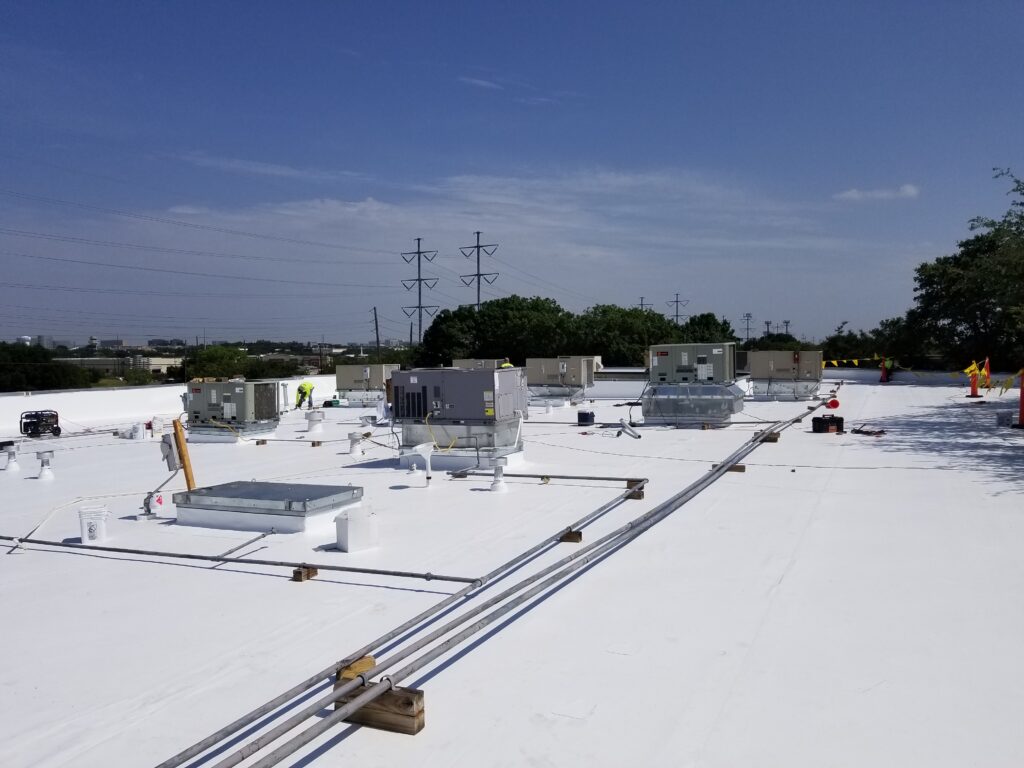
Mixed-Use Development Roofing support covers access, staging, drainage, and roof traffic for Chattanooga commercial buildings.
 Roof Work
EPDM Commercial Roofing
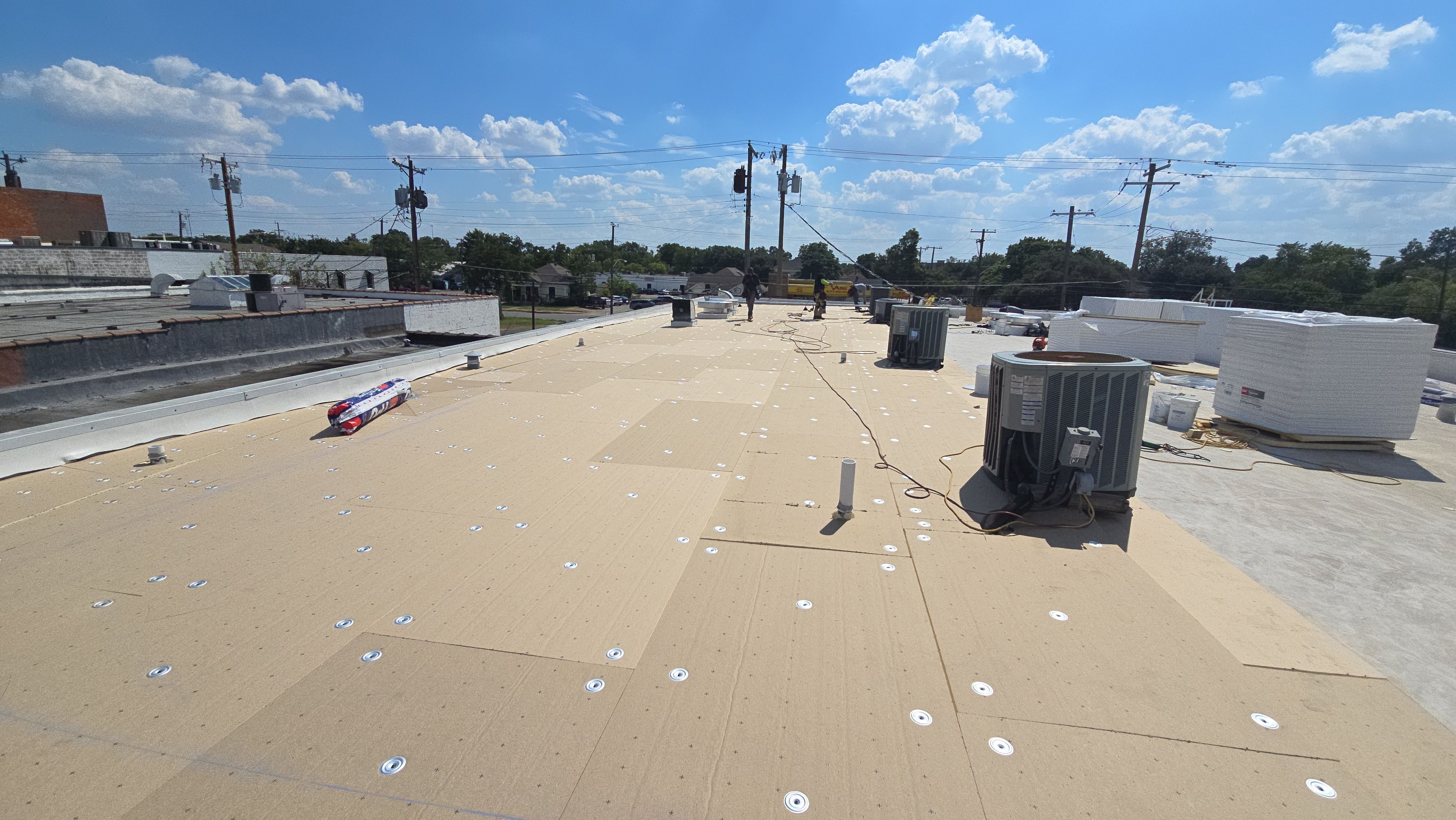
EPDM Commercial Roofing support covers tenant communication, rooftop equipment, and dry-in timing for Chattanooga commercial buildings.
 Roof Work
New Construction Roofing
New Construction Roofing support covers moisture review, edge conditions, and practical budget timing for Chattanooga commercial buildings.