
Healthcare Facility Roofing in Chattanooga, TN
Healthcare Facility Roofing starts with roof evidence before repair, restoration, recover, or replacement decisions are made.
Roof Work
Document the roof before choosing the scope
Commercial roofing for hospitals, medical office buildings, surgical centers, and healthcare facilities throughout Chattanooga, TN.
Chattanooga's healthcare landscape is anchored by CHI Memorial Hospital's flagship Chattanooga campus and the Erlanger Health System's downtown medical district, while a growing network of Tennova Healthcare clinics, freestanding emergency rooms, and specialty surgical centers has spread into the eastern Hamilton County suburbs and across the Tennessee River into the North Shore and Red Bank communities. Each of these facilities carries a roof that must perform at a clinical level, not merely a commercial one, because the patients and procedures inside depend on conditions that no amount of HVAC engineering can maintain when moisture is infiltrating through a compromised membrane.
Chattanooga sits at the convergence of the Ridge and Valley physiographic province and the Cumberland Plateau, which gives the metro area a weather profile that combines significant winter ice accumulation with hot, humid summers and the occasional severe thunderstorm outbreak that pushes hail through the Tennessee Valley. Healthcare roofs in this climate must be engineered to handle ice damming at parapet walls, hail impact resistance at HVAC curb caps and skylights, and the high UV degradation load that summer months impose on exposed elastomeric membranes. We specify materials that meet or exceed FM Global's wind and hail resistance standards for each healthcare project we take on in the greater Chattanooga area.
Infection control during reroofing is not an abstract concern in a facility like Erlanger's Level I trauma center or CHI Memorial's cardiac surgery program, it is a regulated clinical obligation. During active construction above occupied spaces, fungal spore concentrations in the air below a disturbed roof assembly can spike to levels that are dangerous for immunocompromised post-surgical or oncology patients. Our Chattanooga healthcare crews install sealed containment systems before any tearoff begins, use HEPA-filtered exhaust when creating penetrations through roof decks into plenum spaces, and document all containment measures with dated photographs submitted to the facility's infection control officer.
The topographic setting of CHI Memorial's Chattanooga campus and the older wings of Erlanger's downtown complex present a slope and drainage complexity that newer suburban medical parks do not. Buildings that were originally constructed in the 1960s and 1970s often have roof sections that have been added to, raised, patched, and re-patched in ways that create hidden drains, buried scuppers, and areas of chronic ponding that only a thorough core sampling and moisture survey can fully reveal. We conduct those surveys before proposing any scope, because discovering a compromised deck assembly after tearoff begins is far more costly than finding it during the pre-bid investigation.
After-hours construction is the standard approach for reroofing Chattanooga's procedure-intensive healthcare facilities. Erlanger's neurosurgery and orthopedic programs run heavy OR schedules, and any vibration transmitted through the structure from mechanical tearoff equipment can interfere with imaging equipment calibration and create discomfort in surgical fields. We coordinate our heaviest work to night and weekend windows, stage equipment access through service elevators and roof hatches that minimize impact on clinical circulation routes, and clear and clean all rooftop work areas before the morning clinical shift begins.
Assisted living and continuing care retirement communities in Chattanooga's Signal Mountain, East Brainerd, and Hixson corridors represent a growing segment of the regional healthcare real estate market, and the operators of those facilities often lack the in-house plant operations staff that a large acute care hospital employs. For those clients, we offer roof asset management services that function as an outsourced facilities department for the building envelope, we document existing conditions, track warranty status, schedule inspections, and provide capital planning reports so the executive director has defensible data when presenting a roof replacement budget to the ownership group.
Fire-rated assemblies on Chattanooga healthcare buildings must satisfy both the Tennessee State Fire Marshal's requirements and the specific life safety provisions that the Joint Commission or DNV GL imposes as a condition of accreditation. In a multi-story assisted living facility, for example, the roof assembly above any atrium or two-story commons must carry a fire-resistance rating that is coordinated with the fire-resistive construction of the floor-ceiling assemblies below. We provide full UL assembly documentation and coordinate with the project's fire protection engineer to ensure the submitted roofing scope satisfies those ratings before installation begins.
Medical gas and specialty utility penetrations at Chattanooga healthcare facilities demand a level of flashing precision that exceeds standard commercial practice. The roof planes above CHI Memorial's surgical floors and Erlanger's imaging departments are dense with penetrations for oxygen waste, anesthesia exhaust, medical vacuum, laboratory exhaust, and specialty HVAC equipment serving radiology suites. Each of those penetrations represents both a water infiltration risk and a potential infection vector if improperly sealed sealant fails and allows exterior air to bypass the building's pressurization systems. We use pre-fabricated pitch pocket alternatives and compression flashing boots sized specifically for each pipe diameter rather than relying on field-cut sealant-filled pitch pockets that fail under freeze-thaw cycling.
Chattanooga's healthcare market continues to grow as employers along the I-75 and I-24 corridors bring new workers into Hamilton County and demand for outpatient specialty services increases. Whether your facility is a newly constructed ambulatory surgical center in the Cambridge Square development or an aging hospital wing on the Erlanger campus, our team has the expertise and the protocols to deliver a roofing project that meets your clinical and regulatory obligations. Reach out to schedule an assessment.
What information should we send before a Healthcare Facility Roofing roof walk?
Before a Healthcare Facility Roofing roof walk, send the building location, roof age if known, roof access instructions, leak photos, tenant restrictions, and prior roof reports. Those details let us shape the inspection around the actual roof problem instead of arriving with a generic checklist.
Can Healthcare Facility Roofing be handled while the building stays occupied?
For Healthcare Facility Roofing, occupied-building work depends on access, odor, noise, staging room, weather exposure, and how much roof must be opened at one time. We phase the work around dry-in, tenant protection, loading paths, and the operating schedule below the roof.
How do we compare repair, coating, recover, and replacement for Healthcare Facility Roofing?
For Healthcare Facility Roofing, we compare moisture evidence, layer count, deck condition, drainage, age, storm exposure, roof traffic, and future use before naming a scope. That evidence is what separates a repair file from a restoration plan, a recover option, or a replacement budget.
Do you promise manufacturer certification or insurance approval for Healthcare Facility Roofing?
For Healthcare Facility Roofing, we do not invent credentials, promise claim outcomes, or write warranty language before the facts support it. We document conditions, identify manufacturer or carrier questions, and keep recommendations tied to reviewable roof evidence.
What makes Chattanooga planning different for Healthcare Facility Roofing?
Chattanooga planning for Healthcare Facility Roofing has to account for downtown access, UTC and hospital-area traffic, Enterprise South and Centre South Riverport industrial corridors, humid Tennessee Valley heat, severe thunderstorms, hail, freeze-thaw movement, leaf debris, and wind-driven rain.
- PVC Commercial Roofing
- Roof Tear Off Replacement
- Emergency Tarp Dry
- School Roofing
- Government Building Roofing
- Modified Bitumen Roofing
- Hail Damage Restoration
- Multifamily Roofing
Planning checkpoints
From urgent response to responsible scope
Condition
Healthcare Facility Roofing work starts with the affected roof area, water path, membrane condition, and interior evidence.
Operations
Work windows, tenant protection, loading paths, and safety expectations need to be named early.
Options
Repair, maintenance, coating, recover, and replacement should be compared without blurring the tradeoffs.
Next Step
A concise field record helps ownership decide what needs immediate action and what belongs in planning.
Related roof paths
Keep exploring
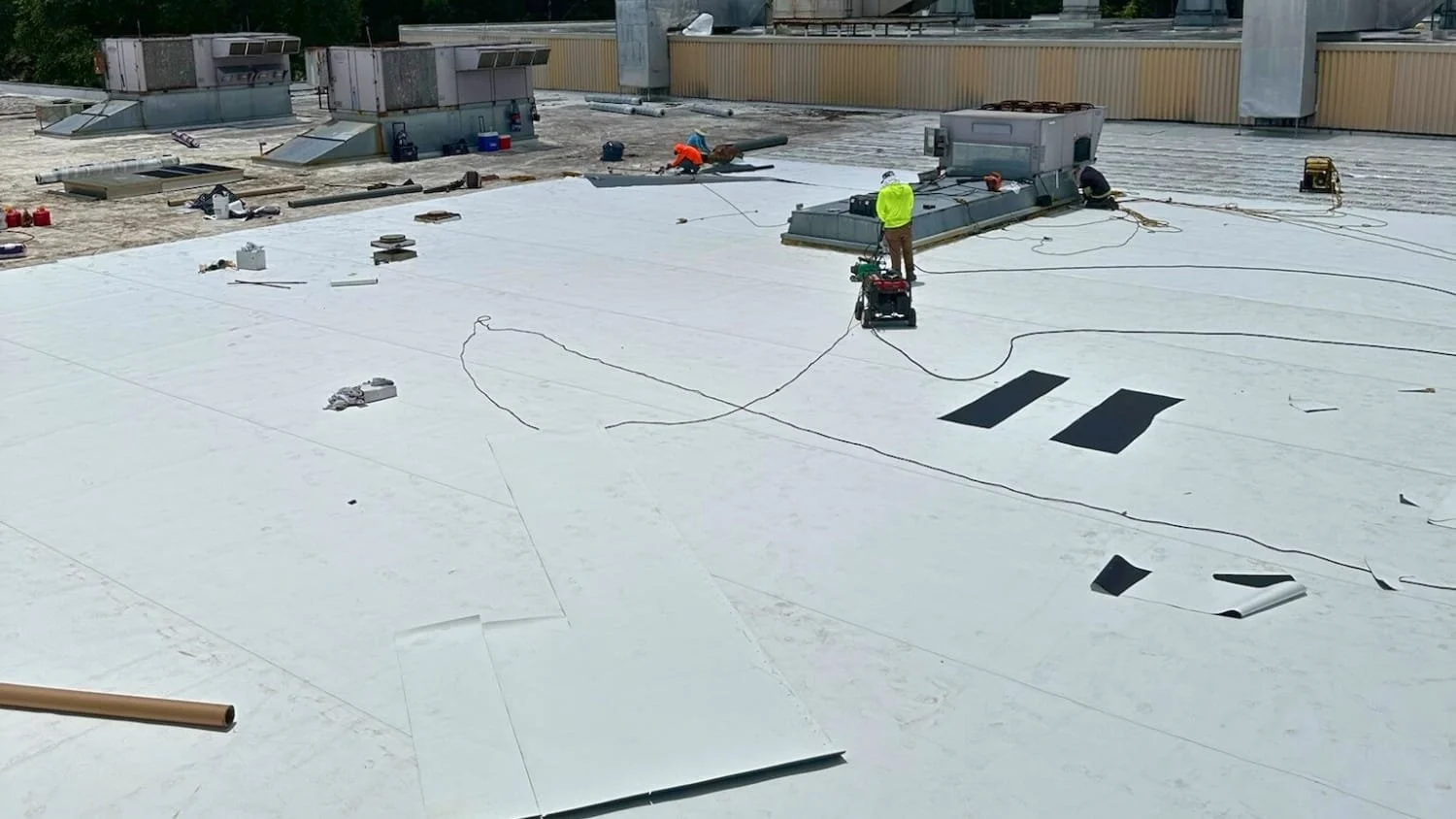 Roof Work
PVC Commercial Roofing
PVC Commercial Roofing support covers access, staging, drainage, and roof traffic for Chattanooga commercial buildings.
 Roof Work
Roof Tear-Off and Replacement
Roof Tear-Off and Replacement support covers tenant communication, rooftop equipment, and dry-in timing for Chattanooga commercial buildings.
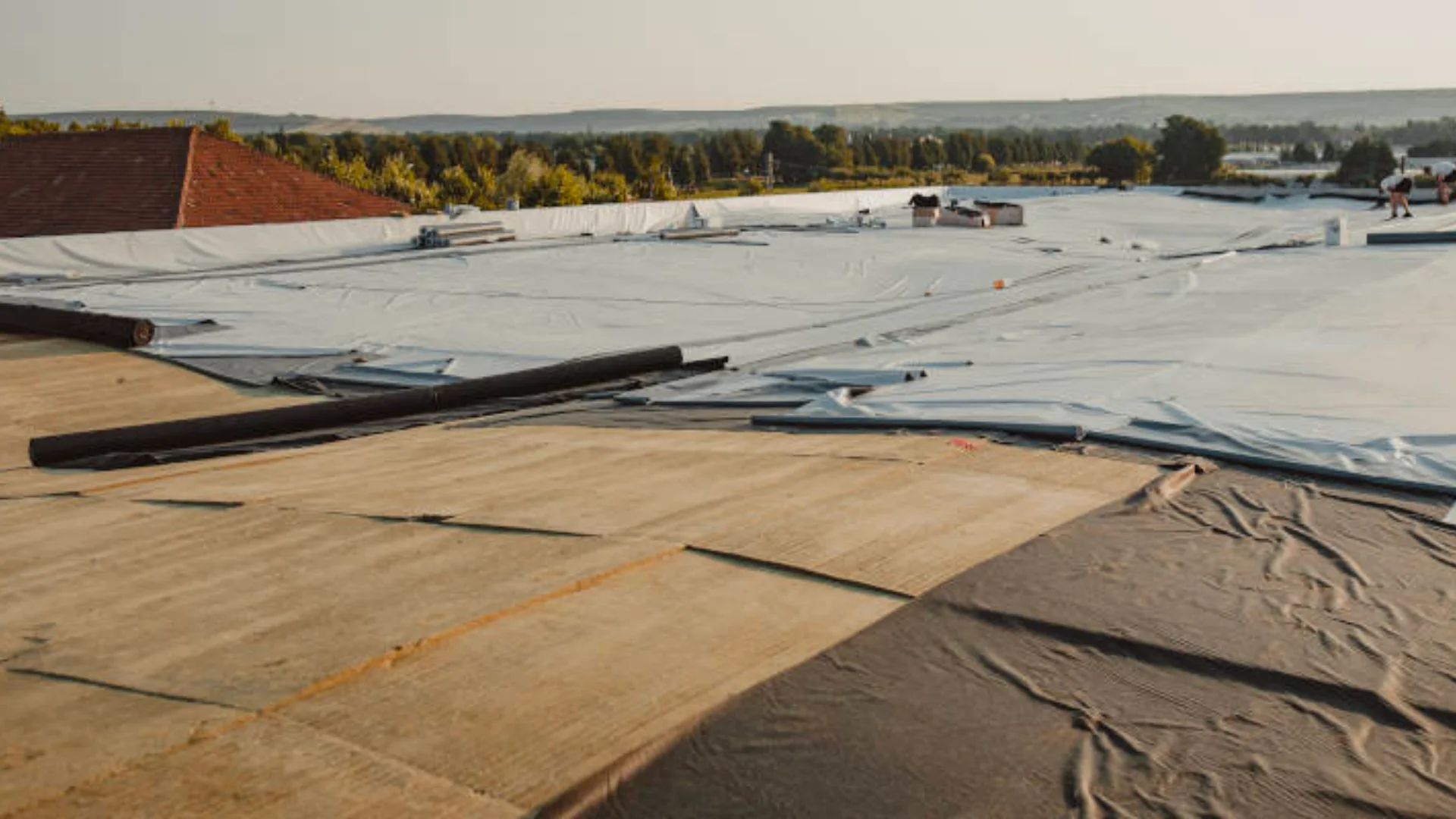 Roof Work
Emergency Tarp Dry In
Emergency Tarp Dry In support covers moisture review, edge conditions, and practical budget timing for Chattanooga commercial buildings.